
Planning note: this guide is not written to criticize any destination. It explains where Japan can be a stronger fit for travellers who want a fresh, premium, future-ready holiday.
Indian travellers already know the classic long-haul holiday formula: famous cities, landmark photos, shopping streets and a packed coach route. That still has value. But many families, honeymooners and premium groups are now asking a better question: what feels new, comfortable, culturally rich and worth planning for the future?
For 2027, Japan deserves a much bigger place in that conversation. It gives travellers seasons, service, modern cities, deep tradition, food, trains, shopping, theme parks, snow, cherry blossoms, autumn colours and major events in one country. The point is not to say Japan is better than every other region. The point is that Japan can be better suited for travellers who want a holiday that feels organised, distinctive and memorable.
Why Japan feels fresh for repeat long-haul travellers
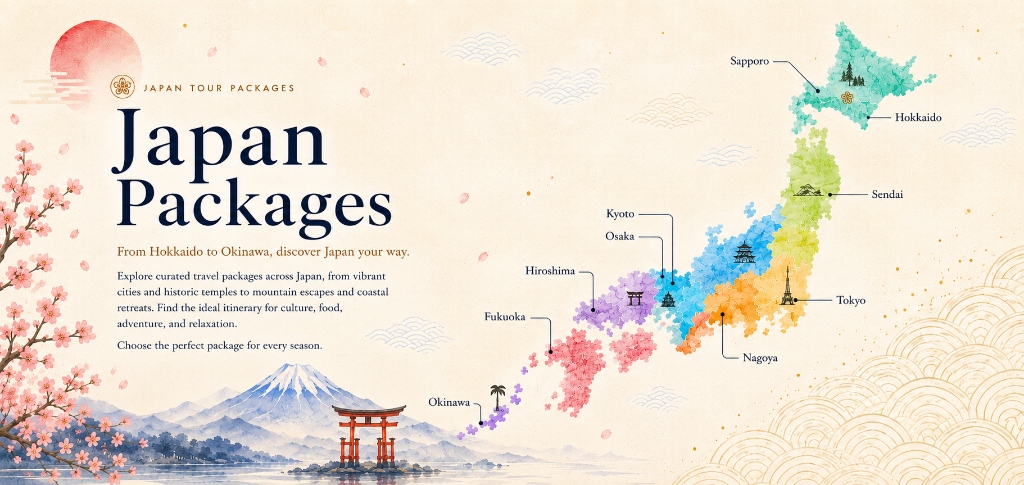
Many travellers have already seen the standard landmark circuit elsewhere. Japan gives them a different story. Tokyo feels futuristic without losing culture. Kyoto gives temples, gardens and old lanes. Osaka gives food and energy. Mt. Fuji gives the visual moment. Hokkaido gives snow and open landscapes. Okinawa gives island comfort. The variety is strong, but the country can still be routed cleanly.
That is important for Indian families. A trip should not feel like a race. Japan can be planned as a clear route with two or three bases instead of too many hotel changes. For families with children or senior travellers, this matters more than adding one more city just to make a brochure look bigger.
Japan has stronger seasonal reasons to travel
Japan is not only a summer vacation or a once-a-year destination. It has four strong seasonal products:
- Winter: Sapporo Snow Festival, Hokkaido snow, hot springs and premium ski add-ons.
- Spring: Sakura planning, Fuji Shibazakura, Hirosaki late sakura and cultural festivals.
- Summer: Gion Matsuri, Tohoku festivals, family-friendly theme parks and shopping.
- Autumn: foliage routes, food, gardens, soft weather and photography-focused trips.
This makes Japan useful for KNI throughout the year. It also helps travellers choose by experience, not only by school-holiday availability.
2027 gives Japan extra future value
Two confirmed 2027 hooks make Japan especially useful for future planning. The official GREENxEXPO 2027 site lists the Yokohama event from March 19 to September 26, 2027. That creates a long travel window that can combine Yokohama, Tokyo, Mt. Fuji and Hakone. The Sapporo tourism calendar lists the 2027 Snow Festival from February 4 to 11, giving winter travellers a clear anchor for Hokkaido planning.
These events matter because they give travellers a reason to book beyond the usual sightseeing plan. A family can build a spring or summer holiday around Yokohama and Tokyo. A honeymoon couple can choose winter Hokkaido with Tokyo shopping. A school or corporate group can use GREENxEXPO as an educational or sustainability-themed visit.
Japan works well for Indian food and comfort planning
Food is one of the biggest hidden concerns for Indian travellers. Japan needs planning, but it can be handled well when the itinerary is built properly. Tokyo, Osaka and Kyoto have improving vegetarian and Indian meal options. Hokkaido, rural areas and festival routes need more care, but that is exactly where KNI's planning helps.
The better approach is to mark meal zones before finalising the day plan. If a family is travelling with children or seniors, the itinerary should not leave dinner to chance after a long transfer. A good Japan plan builds food, rest and shopping into the route instead of treating them as afterthoughts.
Japan gives premium without always feeling formal
Some luxury trips feel distant from real local life. Japan can feel premium and human at the same time. A traveller can stay in a modern Tokyo hotel, visit a quiet Kyoto garden, eat street food in Osaka, ride a clean train, shop for design-led products and still feel the trip is culturally deep.
This is a strong advantage for KNI. Families do not only want sightseeing. They want stories: a child seeing snow for the first time, parents enjoying a ryokan-style stay, couples taking photos near Fuji, friends discovering food alleys, and grandparents moving through a route that feels safe and manageable.
How KNI should position Japan without conflict
The right message is not "skip other destinations." The right message is: choose Japan when you want something more seasonal, more organised, more culturally layered and more future-facing. For clients who have already done familiar long-haul routes, Japan feels fresh. For first-time premium travellers, Japan feels aspirational without being chaotic. For families, the route can be built with care.
KNI should use soft comparison language:
- Instead of "better than Europe," say "a fresh long-haul alternative."
- Instead of "cheaper," say "strong value when routed intelligently."
- Instead of "more beautiful," say "a different kind of beauty across four seasons."
- Instead of "easier," say "very smooth when planned with the right ground support."
Suggested 7 to 9 night first Japan plan
- Tokyo: Arrival, shopping, Asakusa, Shibuya, teamLab-style digital art and family attractions.
- Mt. Fuji or Hakone: Scenic break, lake views, ropeway or onsen-style stay depending on season.
- Kyoto: Fushimi Inari, Arashiyama, temples, kimono photos and traditional lanes.
- Osaka: Food, shopping, Universal Studios Japan or easy Nara add-on.
For 2027, this can be adjusted around Sakura, GREENxEXPO, summer festivals, autumn colours or winter Hokkaido.
KNI recommendation
Japan should be positioned as a future-ready premium holiday: organised, seasonal, photogenic, culturally rich and suitable for families, couples, groups and repeat travellers. It does not need negative comparison. Its strength is clear when the itinerary is practical and the story is well explained.
Planning CTA: If Japan is on your 2027 list, ask KNI to design the route around your season, traveller profile, food needs and comfort level before flights and hotels are locked.